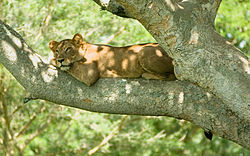
Cat are also known as the Domestic Cat or House Cat to distinguish it from other felines, is a small carnivorous species of crepuscular mammal that is often valued by humans for its companionship and its ability to hunt vermin. It has been associated with humans for at least 9,500 years.
A skilled predator, the cat is known to hunt over 1,000 species for food. It is intelligent and can be trained to obey simple commands. Individual cats have also been known to learn to manipulate simple mechanisms, such as doorknobs. Cats use a variety of vocalizations and types of body language for communication, including mewing ("meow" or "miaow"), purring, hissing, growling, squeaking, chirping, clicking, and grunting. Cats are popular pets and are also bred and shown as registered pedigree pets. This hobby is known as the "Cat Fancy."
Cats typically weigh between 2.5 and 7 kg (5.5–16 pounds); however, some breeds, such as the Maine Coon, can exceed 11.3 kg (25 pounds). Some have been known to reach up to 23 kg (50 pounds) due to overfeeding.
Cats have 7 cervical vertebrae like almost all mammals, 13 thoracic vertebrae (humans have 12), 7 lumbar vertebrae (humans have 5), 3 sacral vertebrae like most mammals (humans have 5 because of their bipedal posture), and, except for Manx cats, 22 or 23 caudal vertebrae (humans have 3 to 5, fused into an internal coccyx). The extra lumbar and thoracic vertebrae account for the cat's enhanced spinal mobility and flexibility, compared with humans. The caudal vertebrae form the tail, used by the cat as a counterbalance to the body during quick movements. Cats also have free-floating clavicle bones, which allows them to pass their body through any space into which they can fit their head.
Cats have highly specialized teeth for the tearing of meat. The premolar and first molar together compose the carnassial pair on each side of the mouth, which efficiently functions to shear meat like a pair of scissors. While this is present in canids, it is highly developed in felines. The cat's tongue has sharp spines, or papillae, useful for retaining and ripping flesh from a carcass. These papillae are small backward-facing hooks that contain keratin which also assist in their grooming.
Thirty-two individual muscles in each ear allow for a manner of directional hearing. A cat can move each ear independently of the other. Because of this mobility, a cat can move its body in one direction and point its ears in another direction. Most cats have straight ears pointing upward.